Why Measure Rotary Shaft Thrust
In rotating systems such as turbines, drills, and lead-screw actuators, axial shaft thrust (generated by pressure gradients, linear load transfer and cutting forces) is a critical parameter that must be accurately characterized to maximize performance and longevity. Thrust bearings, which absorb these axial loads to protect the motor and shaft, are often sized and validated based on this thrust data. While analytical models can offer estimates of thrust under idealized conditions, real-world measurement is essential for design validation and ongoing performance monitoring.
Why use Load Cells in Axial Thrust Measurement
Strain-gauge load cells are a standard choice for axial thrust measurement because they provide high accuracy, fast response times, and reliable performance across diverse environments.
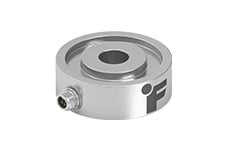
FUTEK’s LTH Series through hole load cells, available in capacities up to 50,000 lbs and a range of inner diameters, offer a versatile solution for a wide range of thrust applications. LTH’s high natural frequency is well-suited to measure rapid load changes while its compact geometry simplifies integration into shaft assemblies. Constructed from welded stainless steel and rated for high ingress protection (IP64-IP67), the LTH series is engineered to withstand fluid ingress, and particulate contamination in demanding environments.
For applications requiring non-standard geometries or specialized integration, FUTEK provides the option to customize its standard offerings to ensure optimal performance in even the most challenging conditions.
How it Works
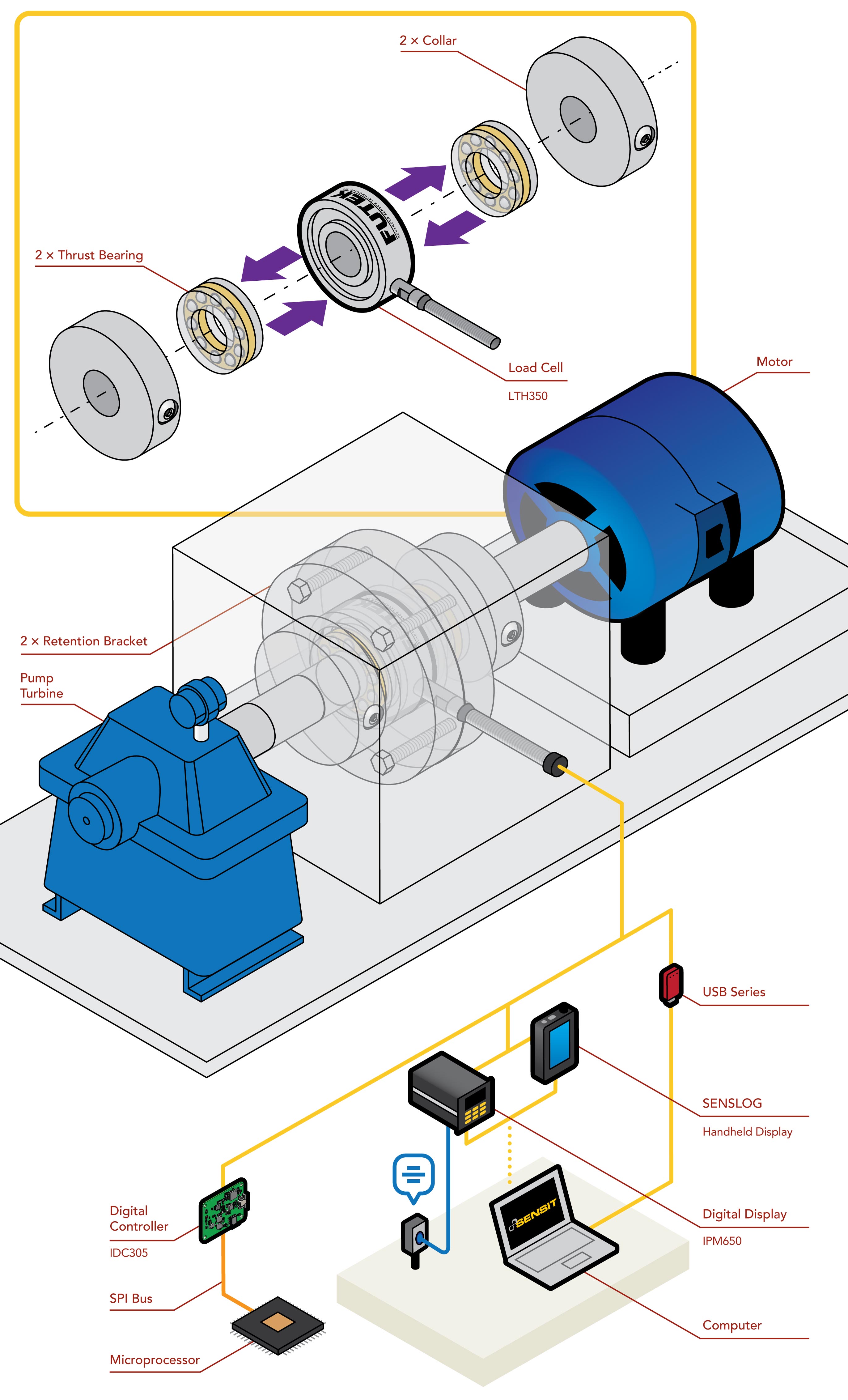
Slide a LTH350 through-hole load cell onto the shaft between thrust bearings and collars to constrain axial movement.
Attach a retention bracket to the load cell’s outer circumference to prevent rotation.
Apply a controlled preload across the LTH350 to ensure thrust transfers uniformly from the thrust bearings onto the sensor.
Under forward thrust the thrust bearing pushes against the load cell’s inner surface, driving a compressive load through the sensor ring.
For measuring bidirectional thrust, restrain the inner diameter of the load cell using hubs enabling both tension and compression measurements.
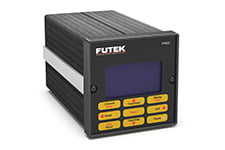
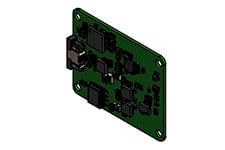
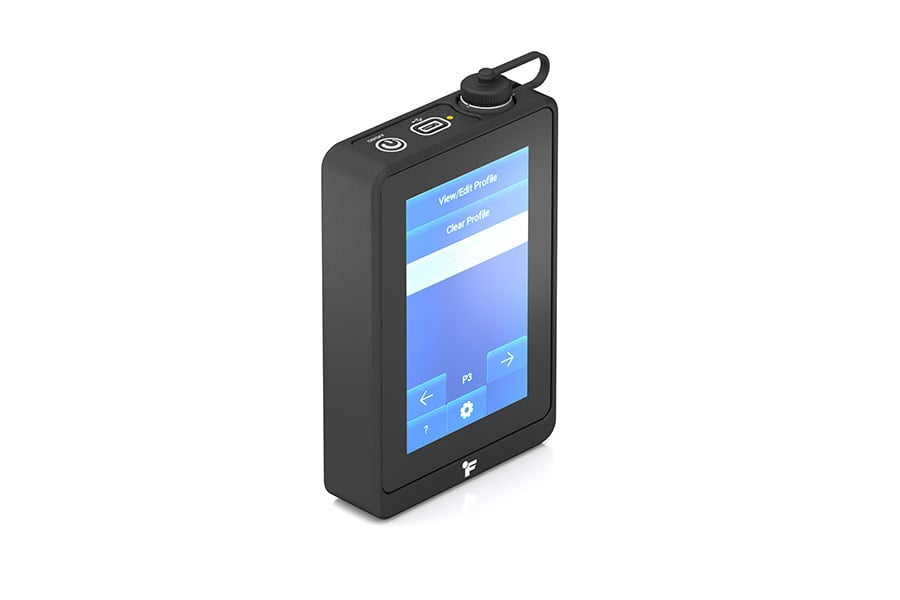
Route the sensor output to IHH500 Digital Handheld Display or IPM650 Panel Mount for real-time capture and display of the measured load. For direct digital integration, userIDC305 or QIA128 conditioning modules.
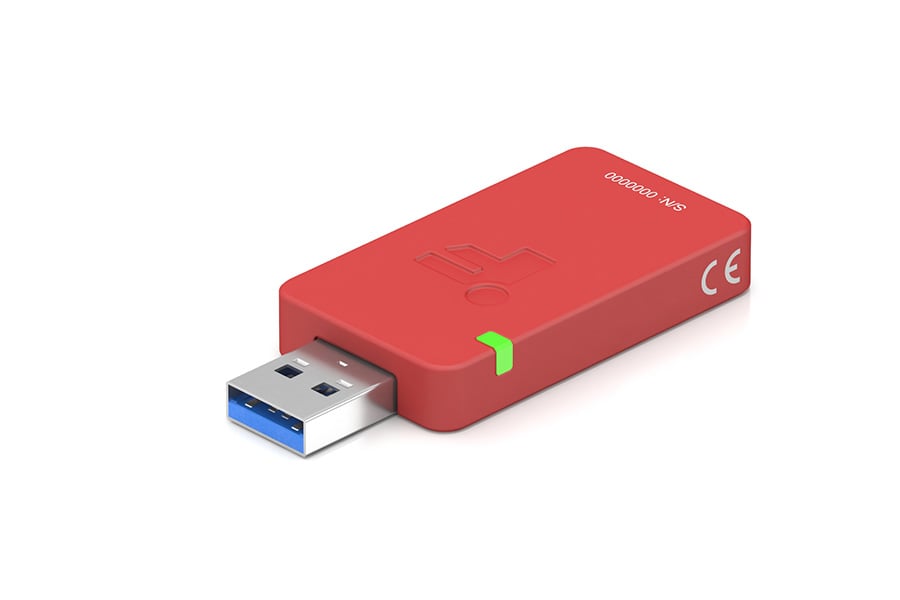
Force data can also be captured using the USB225 Pro connected to a PC running SENSIT for visualization and analysis.
Products in Use
A typical axial thrust measurement setup (as shown in the illustration) integrates a through-hole load cell, precision signal-conditioning electronics, and data acquisition software to capture axial forces transmitted along a rotating shaft. Mounted between the thrust bearing and the stationary housing, the load cell converts axial force into a proportional electrical signal. This signal is conditioned and digitized (IDC305 or QIA128), enabling real-time visualization of thrust loads on a handheld display (IHH500 or SensLog) or on a PC running SENSIT.
Contact Us
Please Contact Us with questions.
Why Measure Rotary Shaft Thrust
In rotating systems such as turbines, drills, and lead-screw actuators, axial shaft thrust (generated by pressure gradients, linear load transfer and cutting forces) is a critical parameter that must be accurately characterized to maximize performance and longevity. Thrust bearings, which absorb these axial loads to protect the motor and shaft, are often sized and validated based on this thrust data. While analytical models can offer estimates of thrust under idealized conditions, real-world measurement is essential for design validation and ongoing performance monitoring.
Why use Load Cells in Axial Thrust Measurement
Strain-gauge load cells are a standard choice for axial thrust measurement because they provide high accuracy, fast response times, and reliable performance across diverse environments.
FUTEK’s LTH Series through hole load cells, available in capacities up to 50,000 lbs and a range of inner diameters, offer a versatile solution for a wide range of thrust applications. LTH’s high natural frequency is well-suited to measure rapid load changes while its compact geometry simplifies integration into shaft assemblies. Constructed from welded stainless steel and rated for high ingress protection (IP64-IP67), the LTH series is engineered to withstand fluid ingress, and particulate contamination in demanding environments.
For applications requiring non-standard geometries or specialized integration, FUTEK provides the option to customize its standard offerings to ensure optimal performance in even the most challenging conditions.