Automotive Seat Testing | Indentation Force Deflection | FUTEK
Contact UsIndentation Force Deflection (IFD) tests measure the firmness of flexible polyurethane foam cushions per ASTM D3574 B1 / ISO 2439. High IFD test results imply increased hardness. Low IFD results indicate soft foam products.
Accuracy is a very important factor when measuring the Indentation Force Deflection. In the automotive industry, robots are used to cycle test seats for wear and durability. Automakers research how people of all shapes and sizes affect the upholstery, seat cushions and seat structures over the life of the vehicle.
How it Works
Car seats undergo robotic test that repetitively reproduce human movements and loads onto the seat under test.
FUTEK’s Fatigue Rated Pancake Load Cell LCF456 is fixed to the distal point of the robots arm to quantify the force that is applied in the process with high accuracy and repeatability.
The load measurements produced help engineers determine the quality of an automotive seat.
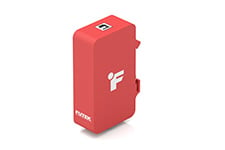
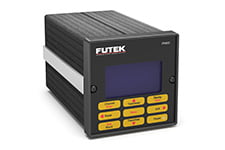
These force measures can be streamed to a computer for analysis utilizing FUTEK’s USB Solutions.
Products in Use
Fatigue Rated Pancake Load Cell (LCF456) paired with Instrumentation (USB Solutions).


Contact Us
Tell us about your application and we'll connect you to a specialist.
All FUTEK application illustrations are strictly conceptual. Contact us for any questions.
Mon-Fri, 7am - 5pm Pacific


