Building for Tomorrow: Inside FUTEK's Visionary Expansion Plans
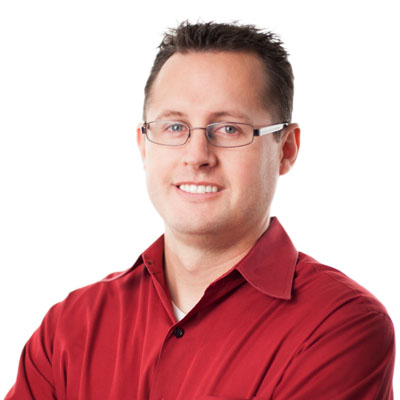
Anyone who knows Javad Mokhbery is familiar with the words “digging the wells before getting thirsty.” It’s a motto that, together with “failure is not an option” forms the core of FUTEK’s DNA. You can look at it in two ways. On one hand, it’s about preparation and long-term planning, making sure that you’re not taken by surprise by predictable business needs. But if you (ahem) dig a little deeper, you can discern a second message, one that celebrates audacity and confidence. Digging a well before you’re thirsty means investing in your future success — even when you don’t know for sure what it will look like.
Throughout FUTEK’s history, wells have been dug to support new initiatives and innovation. It wasn’t always easy, Javad has famously described some of the early days as: “attaching two slabs of concrete to your feet and jumping in the ocean, surviving only by breathing through a hollow bamboo pole.” But in the end, all those investments in infrastructure, quality, and technology turned out to be not only necessary, but inevitable, since they made FUTEK what it is today. But what about the FUTEK of tomorrow? For the past three years, the company has been busy breaking ground on its greatest well yet, which is actually more like a reservoir, the new TK square foot facility at 19 Morgan. We caught up with Javad to discuss the details on the new expansion.
What was the initial goal for acquiring another building?
We had reached a point in our evolution where we had no other choice. As you know, I believe strongly in the need to be ready for whatever comes your way. When you’re serious about your commitment to your business, then you need to make accommodations to let it grow. Once our customers begin production, they expect FUTEK to continuously support them since we are a critical element of their supply chain. And they also expect us to have the capacity to scale up. So, the expansion facility at 19 Morgan enables scaling up in support of anticipated increased activities. Beyond the business growth benefits, the expansion plays a key role in FUTEK’s disaster recovery and business continuity planning. By having a second manufacturing facility we lower the risk of being impacted by unforeseen disasters and can ensure a continuous flow of products to our customers. That gives them confidence in their relationship with us.
But it’s also about our commitment to the team. We have a very talented team that we strongly believe in, and they deserve this expansion and the opportunities it will create.
In what way will the expansion benefit the team?
We will be able to continue to hire talented individuals without the concern of limited space. Again, it’s about being very serious about our commitment. The way I look at it is, let’s say you have a sports car, and then you get married and want to have children. You cannot fit them in that sports car. You need to get an SUV. That’s how I look at it with FUTEK. I strongly believe in the young generation. Two years ago, someone asked me what I was going to do with the new generation? And I said: That’s the wrong question, what you should be asking is what the new generation is going to do with me? I strongly believe that it’s our job to pave the way for the people who come after us.
When you say that the team deserves this expansion, are you talking about any particular team or the whole company?
People in all the different departments, the whole team. We are really blessed. I was talking to HR about this just yesterday. I strongly believe that we are blessed with great employees who are passionate, who don’t just look at their job as just a job, they look at it as something that they contribute to for themselves. When I talk about the FUTEK platform I talk about everybody, not only the current team members working at FUTEK, but everybody who joins us in the future.
So by giving the team more space and more room to grow you take advantage of all that talent?
Exactly. When you come across talent, don’t let anything stand in the way for you to hire them or to team up with them. Building a business doesn’t just happen internally, One of the strategies that we believe in is that you build up in the business and on the business. “In the business” is your infrastructure, “on the business” is the market and the customers. Digging the wells before getting thirsty applies in two ways here. It’s paving the way for the talents you need in order to support the programs, and they will in turn create and prepare new channels of opportunity. We are very serious about this business, and we want to do a lot.
Yes, that makes sense. But it’s always a gamble to invest in new opportunities.
I should publish a book, right? “50 Ways to Achieve Things by Taking Risks as an Entrepreneur.” If you want to be successful, you have to be a risk-taker. You don’t need to take risks in order to maintain a business, but that’s not the point. If you see an opportunity that your business has and you can take advantage of, you have to commit yourself to it. You don’t do it with 100% risk, you do it with calculated risk. In the end, I would say that it’s actually not that much of a risk because the opportunities for FUTEK that the team has created are so important and have so much higher revenue potential than what you’re seeing right now. Looking back in hindsight, I would do everything the same way again. As I said before, we had no other choice.
Were there any surprises when you were preparing the building and planning the expansion?
There were surprises on a daily basis. The pandemic was the first, we bought the building in February 2020 and the lockdown started the following month. The pandemic affected the delivery and it presented cash flow challenges, because all of a sudden you had to pay everyone upfront. It was also hard to be able to hire enough people for the construction. Another major unexpected challenge was that we bought the place as occupiable with a loan that was based on it being ready to use. But once I recognized that the roof was 25 years old, and that there were other important factors that we needed to change, I decided to completely demolish the whole interior and build a new one. The original building was 60,000 square feet and I decided to add another 10,000 square feet to that. Because I didn’t want to get investors involved, it was another surprise to discover that the banks are only there for you on the sunny days, not the rainy ones, and to realize that I had to do all this while maintaining and supporting the existing business. But one of the things that I am blessed with is that I’m solution-minded, I don’t get easily overwhelmed by challenges. When I drive to work I go through 23 traffic lights and every time I go through a green light I think “This couldn’t be any better” and every time I’m at a red light, I think “It could be worse”.
Why was it important to stay independent from investors?
Investors change your vision. People who invest money are mainly interested in their ROI, what they’re getting. They’re not building for the long-term, like we are. Initially, I told people that my intention was to make the building last another 30 years. And then I changed my mind and said “No, it’s going to be for 200 years!” The technology we’re in is so important and the talent that we have is so great that this building has to represent the same quality mindset that we have for our products. We have approached every aspect of this new building without compromise. Most investors would not support that because they would want to get it done as quickly as possible. And as cheaply as possible.
So the new building is almost like a physical manifestation of what the company stands for?
I believe it shows that we mean business, yes. I always believe in walking the walk. When a customer comes and visits us, we want their first impression to be that they made a good decision working with us, because they can see that we are a company that regards quality as paramount. They can feel confident as soon as they go into the building because it’s right there, they can see how seriously we take our technology and processes. We’re giving them that peace of mind, I think that is very important.
Can you talk a little bit about all the new opportunities that you’re making space for?
Overall, the expansion will enable scalability, much higher production capacity, and a focus on efficiency as we employ more automation to enhance the collaboration between man and machine. In 2024, we will focus on production relocation and the support of existing production. In 2025, we will expand our cable fabrication facility and we will also be able to produce our customized gauges. In 2026, we will expand high-precision assembly such as robot arms and evolve our collaboration with key players in the robotic surgery field. In 2026 and 2027, we expect to scale up for higher volume production for the MedTech industry
And what will be the first step towards new innovation that we will see?
The first initiative that we’re launching is Surface Mount Technology (SMT), which is being installed right now. That will help a lot with the manufacturing of electronics. Right now, our electric engineering team does the design of the unit and then they send it to an outside house for the mounting of the board. We will have that capability in 2024. It will benefit us in several ways: we will control the machining of the part and the quality and delivery times; it will help the team significantly with understanding how to prototype different things, and it will make it possible for us to scale up to 10,000 pieces per year.
You already make very innovative electronic instruments. Will you now be able to develop even more advanced products?
Yes. Why? Because we are now integrating our electronics into our sensors, and because of that we have to design the form factor of the electronics to fit that design. So this is going to help us when we design it because we will be able to tailor things even more.
In recent years, FUTEK has designed a host of innovative automation tools and processes. Can you describe how you plan to expand automation even more?
My intention is to utilize as much automation as possible. One of the things we have to do is to minimize the legwork. Right now, the operators carry the parts they’re working on to different locations and departments. We’re going to have several robots that have what they need, it will be like a vending machine that moves around on command. You press a button and the robot comes and asks “Can I help you?” That’s going to happen in 2025. But FUTEK has always shown that we learn how to optimize equipment not only to become more efficient but also to enable us to be more innovative. Further down the line, we will be able to manufacture customized gages by engaging drum coating, laser ablation, and fully automated thin film and deposition equipment. That is something that I’m very excited about, as it will really enable us to scale up. For example, let’s take the Nanosensor –– in the traditional way, with the best technicians, we could produce up to 500 units per day. With the thin film equipment, we will be able to make as many as 25,000 per day.
Once you finally open the doors to 19 Morgan, what is your number one priority to get done on day one?
To ensure the highest standards of safety for everyone, be available and prepared to provide solutions to whatever issues that come up, and to support the team.
If your wildest dreams came true, where would FUTEK be in five years?
I don’t engage in wishful thinking. But so far, all my dreams have materialized.