QIA124, Miniaturized and Digitally Configurable Voltage amplifier
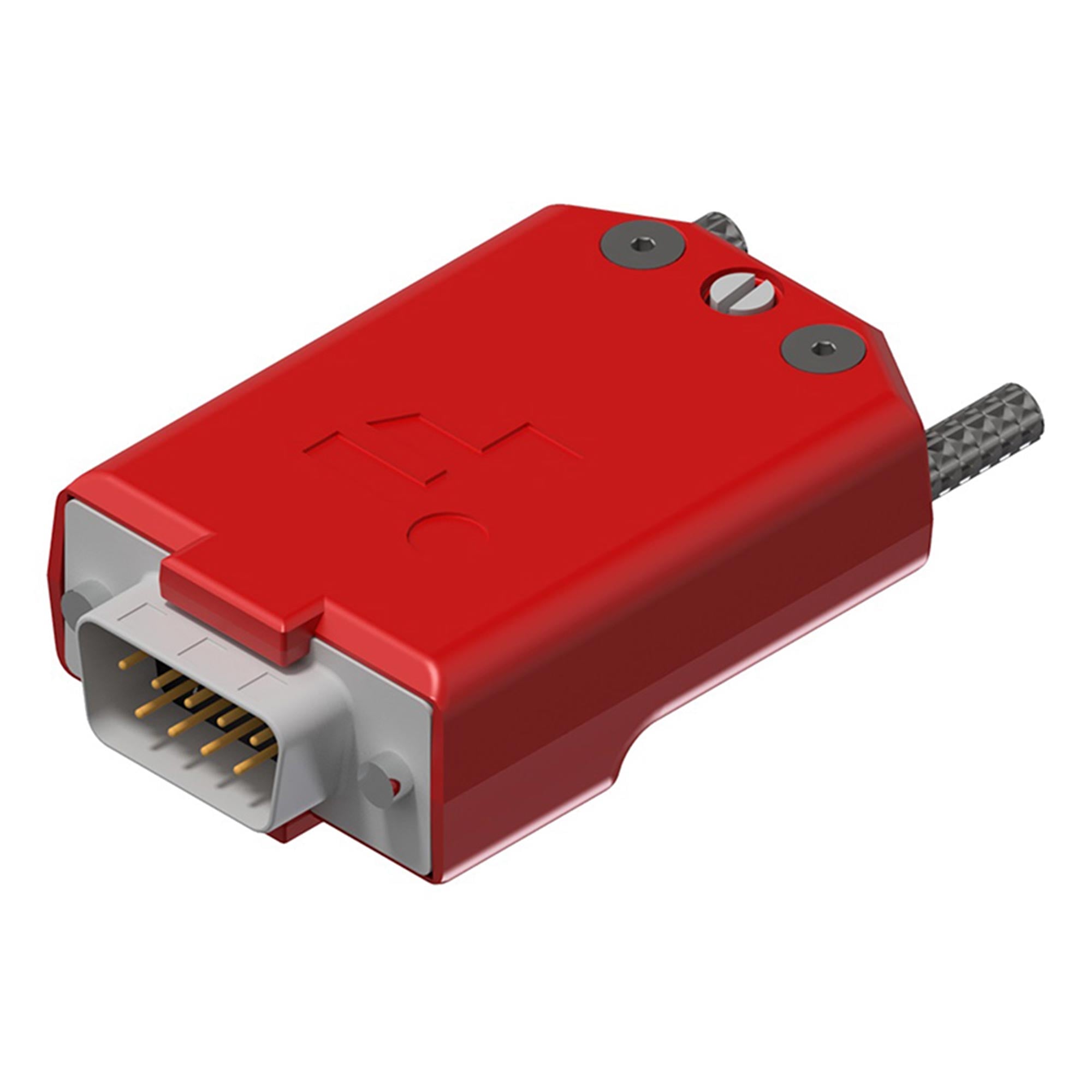
The QIA124 simplifies the integration of strain-gauge sensors into test and measurement systems by incorporating a digitally configurable analog amplifier directly into the DB9 connector at the end of the sensor cable. This eliminates the need for a separate amplifier enclosure and reduces additional wiring and installation complexity.
Unlike traditional amplifiers that rely on analog potentiometers, the QIA124 uses digital configuration to simplify calibration, improve setup repeatability, and reduce the risk of adjustment drift. Its flexible excitation and configurable output settings support integration with a range of sensors and instrumentation. Low noise, nonlinearity, and temperature-related drift help minimize measurement errors, providing a compact signal-conditioning solution for precision force, load, torque, and pressure measurement applications.
Inline Integration
Integrating the amplifier into the DB9 connector at the sensor-cable termination eliminates the need for a separate enclosure, reducing additional wiring, mounting hardware, and installation complexity.
Flexible Output Configuration
Adjustable excitation, offset, and span allow the QIA124 to pair with a wide range of strain-gauge sensors and provide outputs up to ±10 VDC. Configurable output ranges include 0–1.5–3 VDC and 0–2.5–5 VDC, as well as application-specific ranges such as ±2.5 VDC or ±3.3 VDC. Flexible offset and span settings accommodate nonstandard voltage levels, supporting 3.3 V systems and other instrumentation with specific analog input requirements.
Repeatable Digital Configuration
Digital configurability eliminates the need for analog potentiometers, reducing the risk of settings shifting due to vibration, handling, or other mechanical factors. This ensures consistent settings across installations and simplifies setup, calibration, and sensor replacement.
Ultra-low Noise
Low noise, nonlinearity, and temperature-related drift help preserve measurement quality in precision strain-gauge applications. With non-linearity of 0.05% of FSR, 5 mVp-p noise, and a temperature coefficient of 15 ppm of FSR/°C, the QIA124 enables consistent measurement performance.
Compact DAQ Integration
The compact DB9 form factor allows multiple QIA124-equipped sensors to connect side by side to compatible data-acquisition systems. This reduces the need for separate amplifier modules and additional mounting space, simplifying installations where multiple sensors require signal conditioning.