Radiation-Hardened Load Cells and Torque Sensors for Nuclear Applications
FUTEK’s Engineering Approach for Radiation-Exposed Sensor Applications
Radiation-exposed environments introduce unique challenges: limited physical access, long service intervals, cumulative drift and degradation, and demanding qualification requirements. These constraints require careful trade-offs between durability, performance stability, validation, and total cost of ownership (TCO).
Designing radiation-tolerant and radiation-hardened load cells and torque sensors for nuclear and energy applications requires a disciplined, systems-level engineering approach. Upfront definition of the radiation profile, environmental conditions, mechanical range, access constraints, cable requirements, accuracy expectations, integration needs, and expected service life is essential, as each factor directly influences sensor design, validation strategy, and long-term outcomes.
Establishing these parameters early accelerates feasibility reviews and minimizes delays. Depending on the application and validation scope, FUTEK supports sensing solutions for radiation environments reaching the MegaRad level, with the final design tailored to the operating profile and lifecycle requirements of each system.
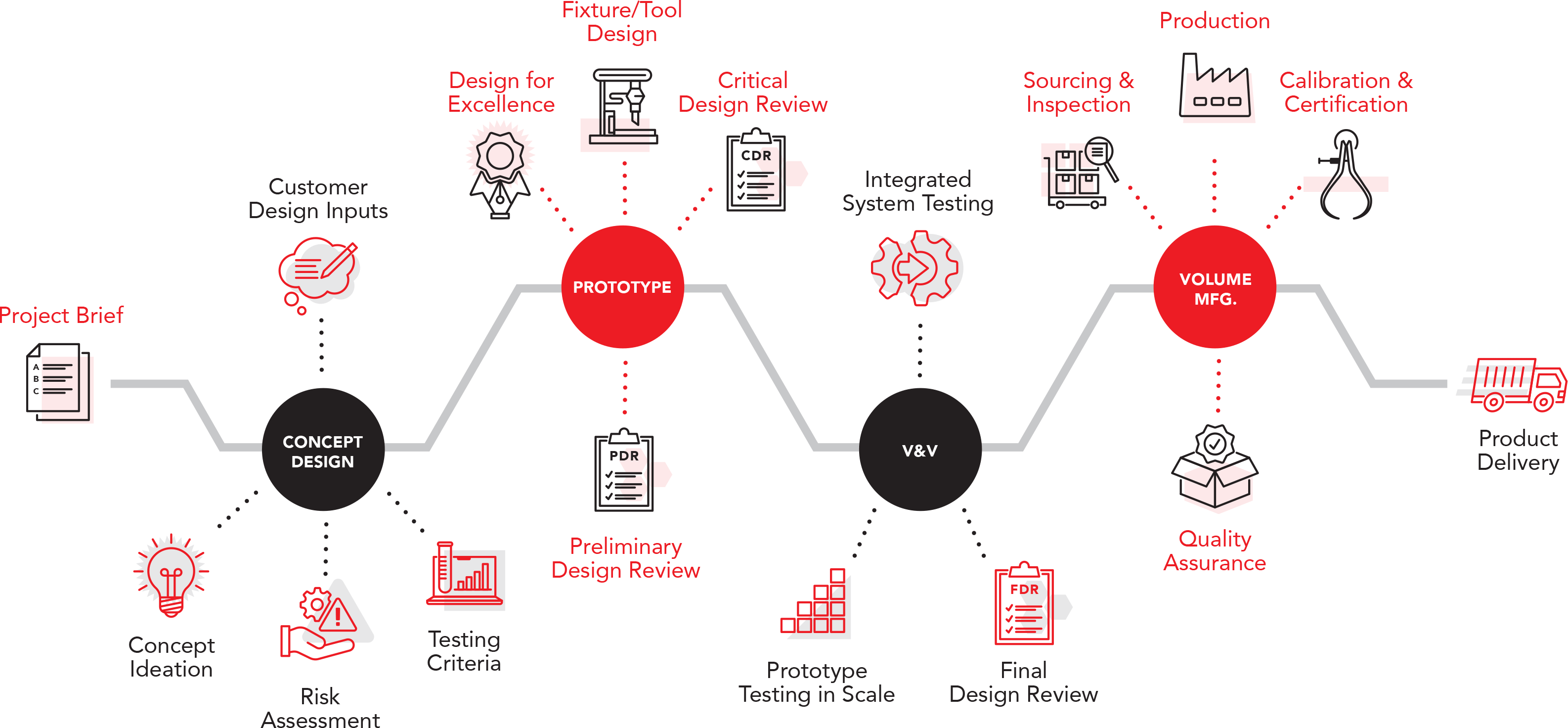
To address these challenges, FUTEK prioritizes risk reduction, predictable performance, and qualification support throughout development. Through phased evaluation, careful material selection, and application-specific testing, FUTEK helps customers implement sensing solutions aligned with real-world radiation conditions and long-term lifecycle expectations.
Typical Radiation-Exposed Applications in Nuclear Power Plants
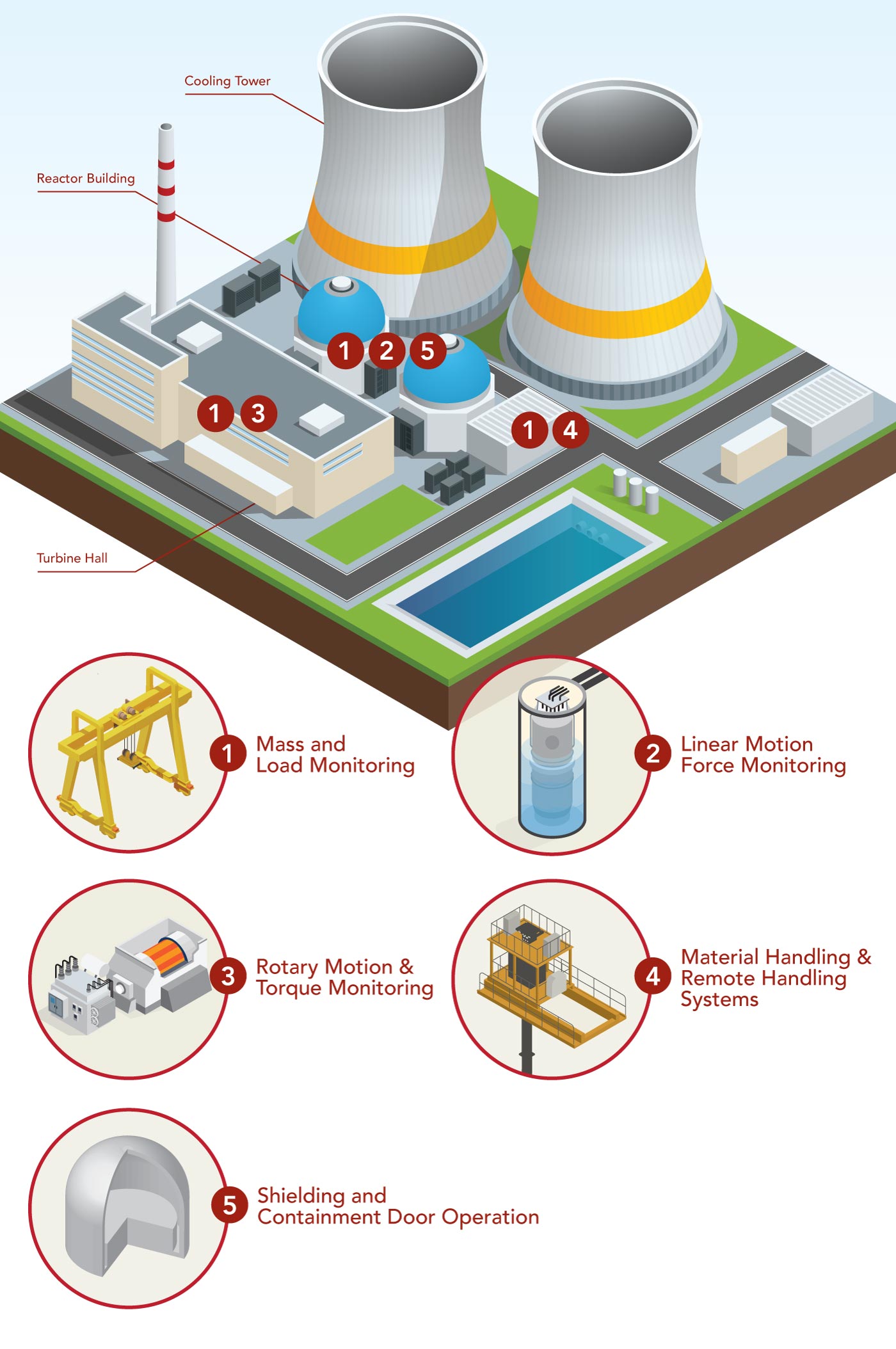
Load cells and torque sensors are deployed throughout nuclear facilities to support safe operation, maintenance, and material handling in radiation restricted areas:
- Mass and Load Monitoring – Fuel assembly verification, crane and hoist load monitoring in containment, refueling, and turbine areas, and radioactive waste container handling to ensure compliance with allowable load limits.
- Linear Motion Force Monitoring – Actuators, control rod drive mechanisms, and dampers where force measurement supports safe, predictable motion inside the containment shell.
- Rotary Motion and Torque Monitoring – Valve actuators, motor-driven systems, and rotating assemblies used to detect binding, wear, and abnormal torque conditions, particularly in the turbine and generator areas.
- Material Handling and Remote Handling Systems – Robotic manipulators, fuel handling machines, and shielded transfer systems operating in high-radiation or inaccessible zones.
- Shielding and Containment Door Operation – Partition doors, shield doors, and blast doors requiring controlled force and torque for safe operation.
Phased Evaluation
Phased evaluation is a structured development approach where requirements definition, material and design selection, prototype testing, and radiation validation are performed in stages. This allows key risks—such as material degradation, signal drift, and integration constraints—to be identified and addressed early, resulting in more predictable performance and reduced uncertainty in radiation-exposed applications.
Radiation-Tolerant Materials and Component Evaluation
In radiation applications, component degradation is unavoidable and must be managed as part of the overall system design. FUTEK addresses this by evaluating material behavior, expected operating conditions, and long-term stability under a defined exposure profile. This supports predictable performance over time, which is especially important in nuclear and energy environments where service intervals are long and access for replacement and recalibration is limited.
Testing, Validation, and Customer Collaboration
Testing and validation are essential to understanding how sensors degrade in radiation environments. FUTEK supports industry-standard radiation testing, often in collaboration with specialized third-party laboratories and customer-designated testing facilities.
Testing data is used to benchmark performance, identify dominant failure modes, and inform subsequent design iterations. This evidence-based process drives continuous improvements in radiation-hardened sensor deployments.
Electronics, Signal Conditioning, and Data Integration
Electronics convert low-level strain-gauge signals into usable data for control and monitoring systems. In radiation environments, one of the key engineering decisions is whether the electronics should be located in the field or outside the higher-exposure zone.
System architecture depends on factors such as radiation exposure, cable length, signal quality requirements, and integration needs. In many cases, the sensor is placed within the radiation area while signal conditioning electronics are located remotely to reduce exposure risk and maintain signal integrity.
FUTEK offers a broad range of electronics solutions for strain-gauge-based sensors, including amplifiers and signal conditioners with analog outputs (mA,VDC) and digital interfaces such as USB, SPI, and UART. These solutions also help mitigate noise, drift, grounding issues, and EMI, which can become more pronounced in harsh operating environments or with long cable runs.
Through decades of collaboration with NASA and JPL, FUTEK has developed expertise in designing custom space-grade sensors. These projects demand rigorous assessment of design constraints, material selection, and long-term performance under extreme operating conditions, providing a strong foundation for developing sensing solutions for highly constrained radiation-sensitive applications.
FAQs
Radiation-tolerant sensors are designed to continue operating under a defined radiation profile, although some level of performance degradation may be expected over time. Radiation-hardened sensors are typically engineered and validated to minimize degradation and maintain performance where radiation effects are less acceptable or operational requirements are more stringent. The appropriate approach depends on the radiation dose, exposure duration, performance requirements, and validation criteria of the application.
Yes. We support radiation testing through third-party labs or customer facilities and can provide test results that benchmark performance and guide design improvements.
Not always. Many systems place the sensor in the radiation area while locating signal conditioning electronics remotely, depending on the installation and exposure profile. We help define the optimal architecture depending on each application’s specific requirements.
Please specify the radiation profile (type, dose rate, cumulative dose, duration), temperature range, mechanical range (load/torque/pressure), installation constraints (mounting, cable length), required accuracy and stability, and preferred output and integration.
Typical use cases include load monitoring for lifting and handling, force monitoring in actuators, torque monitoring in valve and rotating systems, remote handling robotics, and shielding and containment door operation.
Yes, when timelines and budgets allow for custom engineering and qualification. Our primary focus is on embedded, repeatable programs, but we also welcome research projects that align well with our capabilities.