When designing electric dental handpieces, it's crucial to understand the torque the motor generates to optimize the digital control laws. A sensor is needed in the design and testing phase of the product to capture torque generated over a wide range of conditions. With the data in hand, a more refined and capable handpiece can be developed.
How it Works
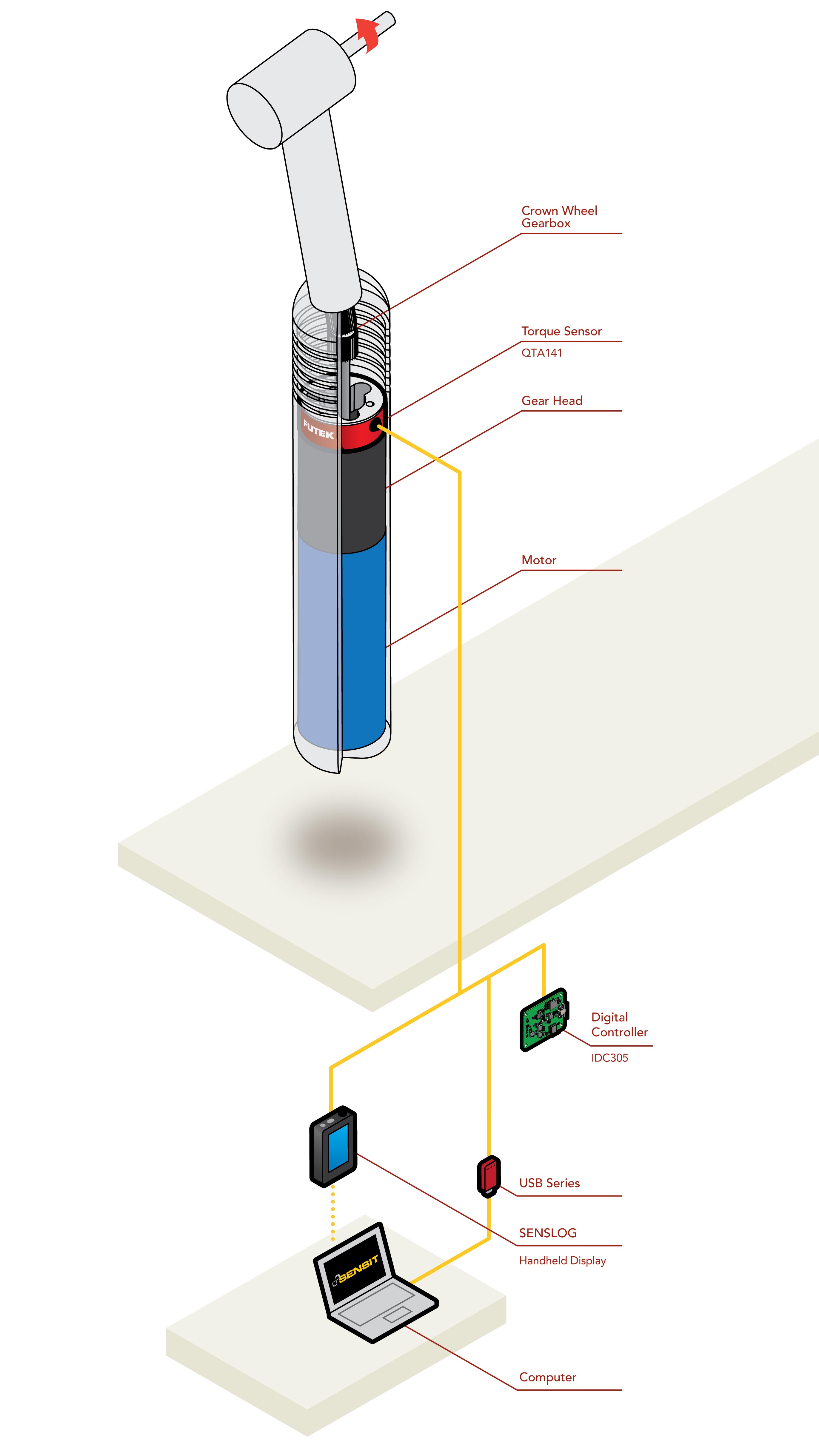
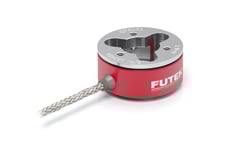
A QTA141 Micro Reaction Torque Sensor is installed inline with the handpiece motor and its mount.
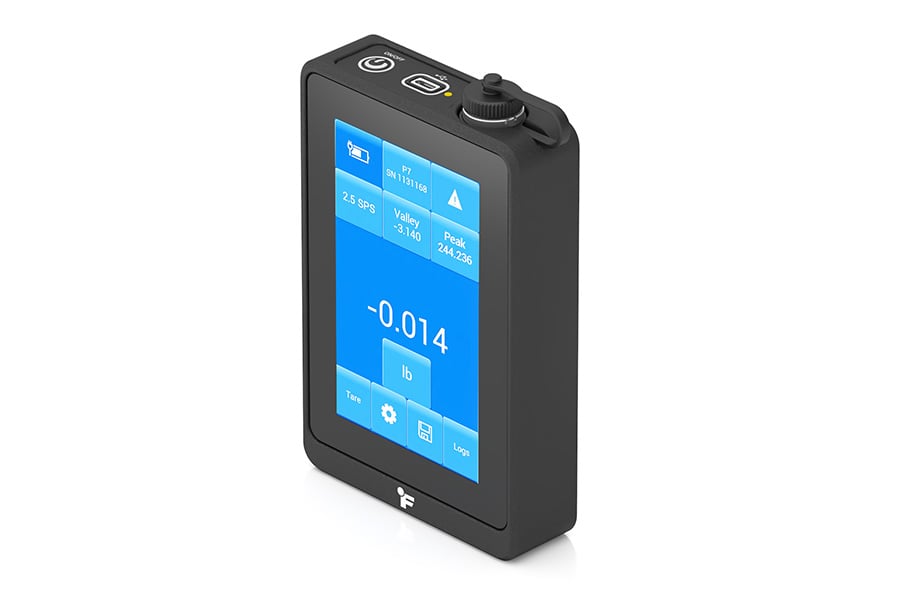
The signal generated by the QTA141 is transmitted to the SENSLOG Handheld Display for display.
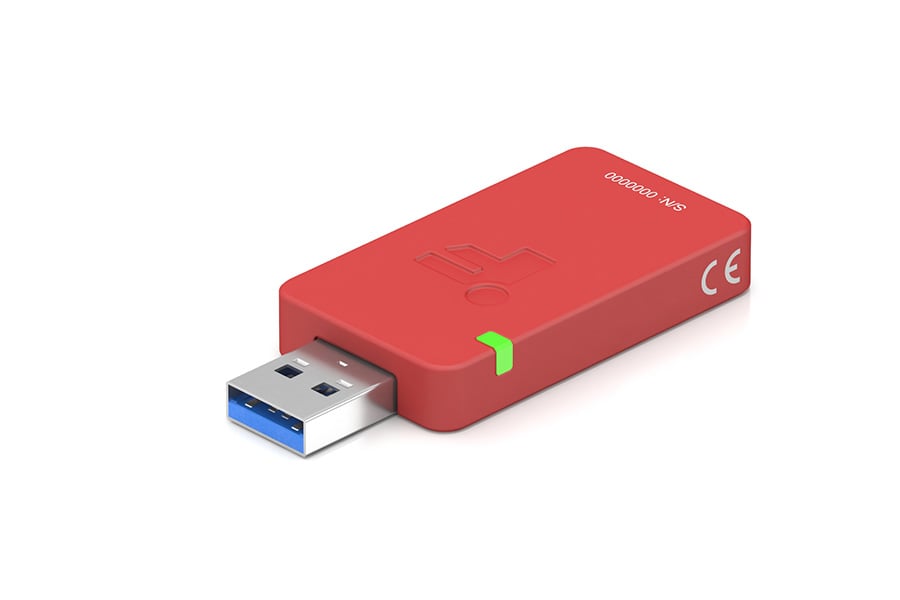
The signal can also be sent to the USB225 High-Resolution USB Solution for display and logging of data on a PC running our SENSIT software.
Additionally, data logging can be performed with the SENSLOG Handheld Display connected to a PC running SENSIT as well.
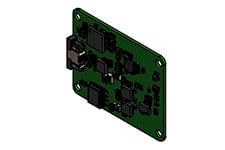
Lastly, with the IDC305 Digital Controller with SPI, USB, and Analog Output, the sensor output can be captured via SPI into a microcontroller, USB and a PC running SENSIT, or via Analog Output into a PLC or DAQ.
Products in Use
One QTA141 Micro Reaction Torque Sensor paired with Instrumentation (SENSLOG Handheld Display, USB225, IDC305)
Contact Us
Please Contact Us with questions.
When designing electric dental handpieces, it's crucial to understand the torque the motor generates to optimize the digital control laws. A sensor is needed in the design and testing phase of the product to capture torque generated over a wide range of conditions. With the data in hand, a more refined and capable handpiece can be developed.