In industrial applications involving linear actuators, measuring and controlling the force applied by the actuator is essential for ensuring safety and reliability. The two primary approaches for controlling actuator force are open-loop and closed-loop. The latter approach requires precision force sensors such as FUTEK’s LCB Series, which provide accurate, repeatable measurements in a compact, lightweight form factor.
Open-Loop Linear Actuators Force Control
In an open-loop force control system, no feedback from the actuator’s output is used to adjust its input. Force is estimated indirectly, for example, by measuring the voltage or current supplied to the actuator’s servo motor. This approach is prone to estimation errors as external interferences such as friction, stiction, and wear are not accounted for by voltage and current measurements.
Closed-Loop Linear Actuator Force Control Using Load Cell
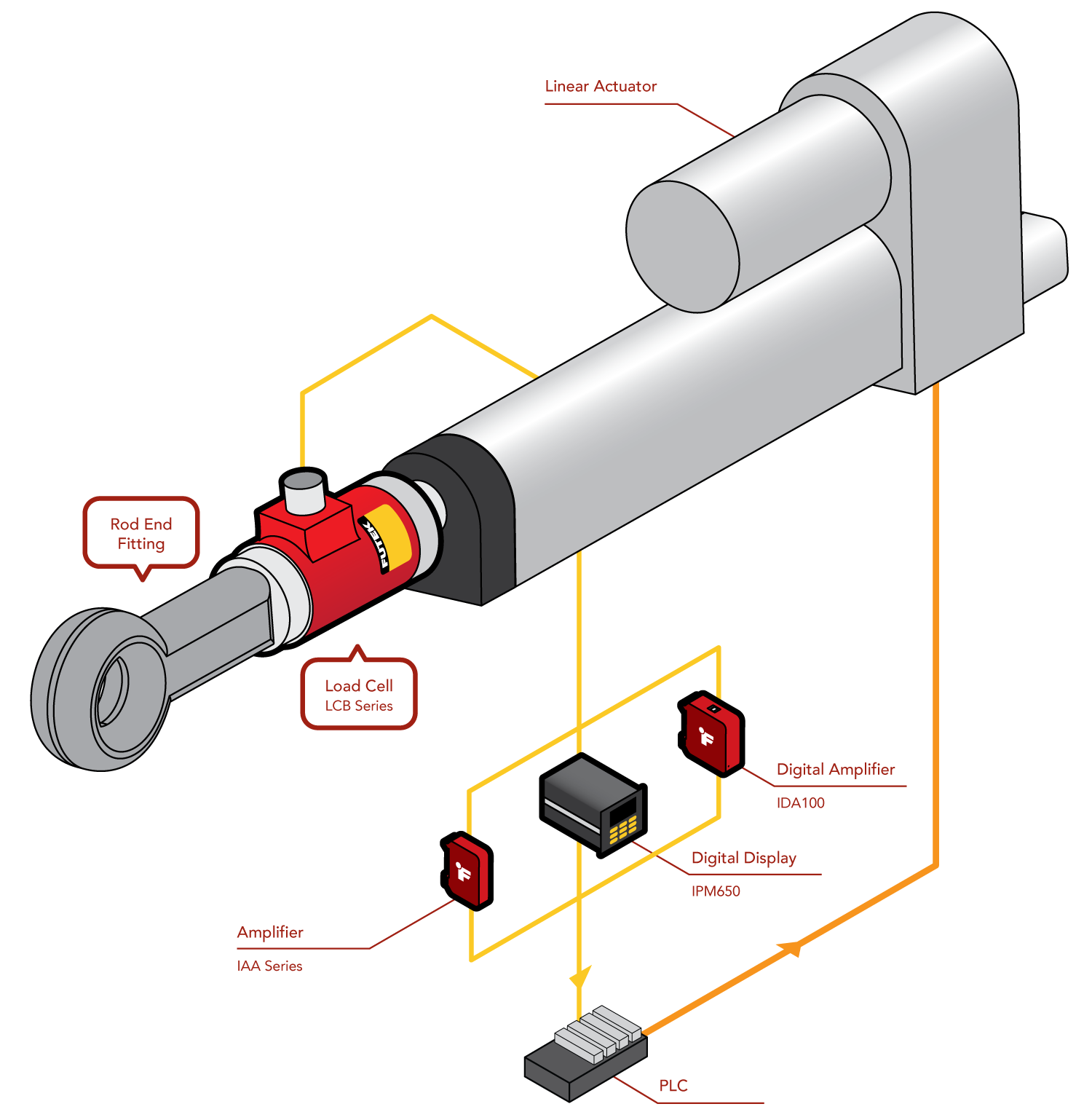
In a closed-loop system, the actual output force is continuously measured and fed back to a controller (PLC), which adjusts the actuator’s output in real time to minimize error. Applications that demand greater precision than open loop control require the installation of a load cell in line with the linear actuator. The load cell provides both static and dynamic force feedback to a PLC, which adjusts the servo motor output in real time. This approach achieves control accuracy of 1% or better.
Why is FUTEK’s LCB Series Suitable for Linear Actuator Force Control?
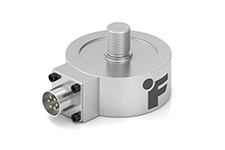
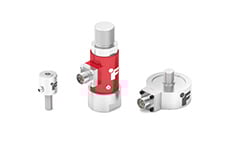
The LCB Series consists of rod end load cells (Tension/Compression) designed for applications involving inline actuators or hydraulic jacks with male/female threads. Lower capacity models use lightweight 2024 Aluminum alloy, while higher-capacity models use 17-4 Stainless Steel. The series is well suited for mid to high range load capacities (1,000 lb – 20,000 lb), and can be mounted directly on the cylinder rod to measure contact forces and overloads.
LCB Series Features
- Load measurement accuracy of ±0.5% of rated output
- Repeatability of ±0.1% of rated output
- Lightweight (LCB200 model weighs just 99 g)
- Tension and compression measurement
- Low temperature drift
- Ideal for dynamic or static measurements
- Easy inline installation onto a threaded rod or actuator
How it Works
The fixed end of an LCB Series rod end load cell is mounted to the end of the linear actuator.
The active end of the load cell is attached to the load.
The load cell measures the force applied by the actuator in real time.
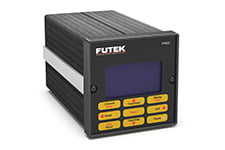
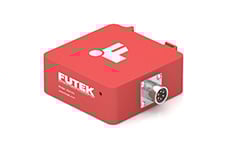
Force measurements can be displayed directly on the IPM650 Panel Mount Display or transmitted via the IDA100 amplifier to a PC running FUTEK's SENSIT™ software.
An amplified analog signal is simultaneously transmitted to the PLC to enable closed-loop force control.
Products in Use
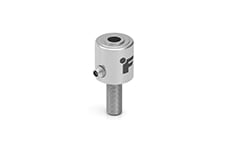
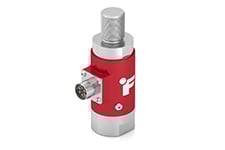
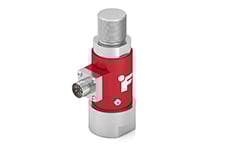
One LCB Series rod end load cell (LCB200, LCB400, and LCB450) paired with instrumentation (IPM650 or IDA100)
Contact Us
Please Contact Us with questions.
In industrial applications involving linear actuators, measuring and controlling the force applied by the actuator is essential for ensuring safety and reliability. The two primary approaches for controlling actuator force are open-loop and closed-loop. The latter approach requires precision force sensors such as FUTEK’s LCB Series, which provide accurate, repeatable measurements in a compact, lightweight form factor.
Open-Loop Linear Actuators Force Control
In an open-loop force control system, no feedback from the actuator’s output is used to adjust its input. Force is estimated indirectly, for example, by measuring the voltage or current supplied to the actuator’s servo motor. This approach is prone to estimation errors as external interferences such as friction, stiction, and wear are not accounted for by voltage and current measurements.
Closed-Loop Linear Actuator Force Control Using Load Cell
In a closed-loop system, the actual output force is continuously measured and fed back to a controller (PLC), which adjusts the actuator’s output in real time to minimize error. Applications that demand greater precision than open loop control require the installation of a load cell in line with the linear actuator. The load cell provides both static and dynamic force feedback to a PLC, which adjusts the servo motor output in real time. This approach achieves control accuracy of 1% or better.
Why is FUTEK’s LCB Series Suitable for Linear Actuator Force Control?
The LCB Series consists of rod end load cells (Tension/Compression) designed for applications involving inline actuators or hydraulic jacks with male/female threads. Lower capacity models use lightweight 2024 Aluminum alloy, while higher-capacity models use 17-4 Stainless Steel. The series is well suited for mid to high range load capacities (1,000 lb – 20,000 lb), and can be mounted directly on the cylinder rod to measure contact forces and overloads.
LCB Series Features
- Load measurement accuracy of ±0.5% of rated output
- Repeatability of ±0.1% of rated output
- Lightweight (LCB200 model weighs just 99 g)
- Tension and compression measurement
- Low temperature drift
- Ideal for dynamic or static measurements
- Easy inline installation onto a threaded rod or actuator