Why Outgassing Prevention in Vacuum Chambers is Essential
Vacuum testing is necessary in applications such as space-rated testing, wafer manufacturing, and material bonding, where maintaining a contaminant-free environment is critical. These systems are designed to remove unwanted gas molecules. However, when instrumentation is introduced, outgassing—the release of trapped gases from materials under low pressure—can pose serious challenges.. Outgassed vapors can cause staining and corrosion of materials within the chamber. Resulting deposits may occlude camera lenses and CCD elements, degrade sensor performance, and damage components, often invalidating measurements. To mitigate these risks, vacuum-compatible load cells and torque sensors are essential for both test measurement environments and automated manufacturing processes.
Maintaining Measurement Integrity with FUTEK’s Low-Outgassing Solutions
FUTEK has developed several force and torque sensor solutions using low-outgassing materials (such as Teflon) and adhesives to ensure vacuum compatibility and minimize contamination risks.
- LSB201 Miniature S-Beam Load Cell (QSH02270): Compact and precise, this sensor is offered in force ranges up to 100 lb and delivers unparalleled accuracy of 0.1% of Rated Output (RO), even in vacuum environments.
- LCM300 Inline Load Cell (QSH02215): Featuring a male-to-male threaded design for seamless integration, this model delivers high accuracy of 0.25% of RO under loads up to 100 lb. This unit is also uniquely calibrated for operation at temperatures as low as -45°C.
- LCF400 Universal Pancake Load Cell (QSH01534): Designed for demanding applications, this sensor supports up to 3,000 lb and provides high resistance to extraneous loading.
- LTH350 Through Hole Donut Load Cell (QSH02237): Optimized for high-capacity compression applications (5,000 lbs. max), this load cell maintains a compact footprint with an outer diameter of 1.48” and height of 0.5”.
- TFF400 Reaction Torque Sensor (QSH02278): Precision manufacturing and material selection, enable this flange-to-flange torque sensor to maintain exceptional accuracy (0.2% of RO) while measuring torques up to 500 in-lb. It is particularly well-suited for robotic torque sensing in vacuum chamber automation.
FUTEK also offers extensive customization to meet unique application requirements such as reduced footprints, increased capacity, and hermetic sealing for added protection. Across both load and torque sensing technologies, FUTEK ensures components such as flexure metals, cable materials, and strain gauge adhesives meet stringent vacuum standards to prevent outgassing.
Signal Conditioning and Precision In-House Calibration
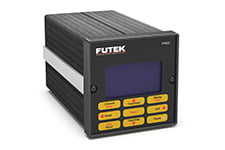
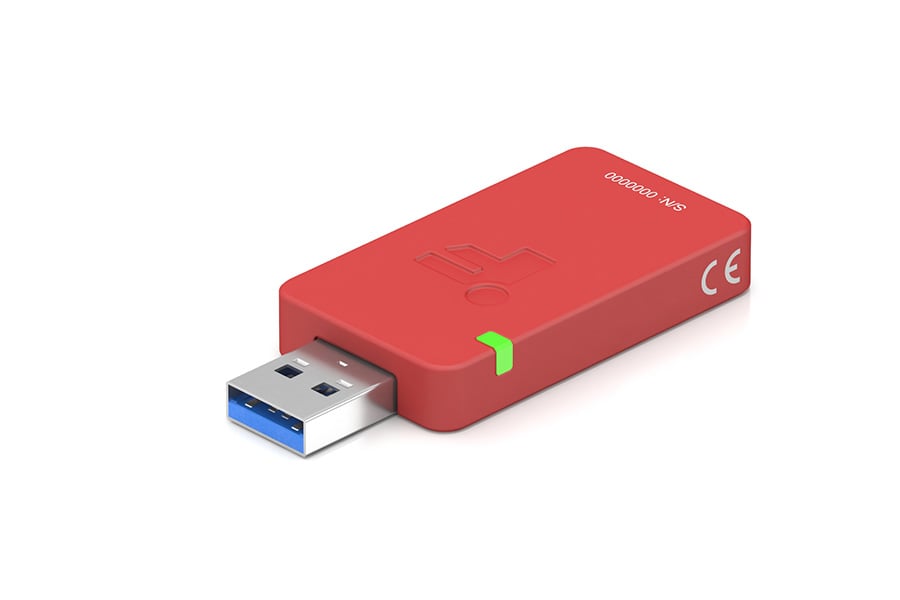
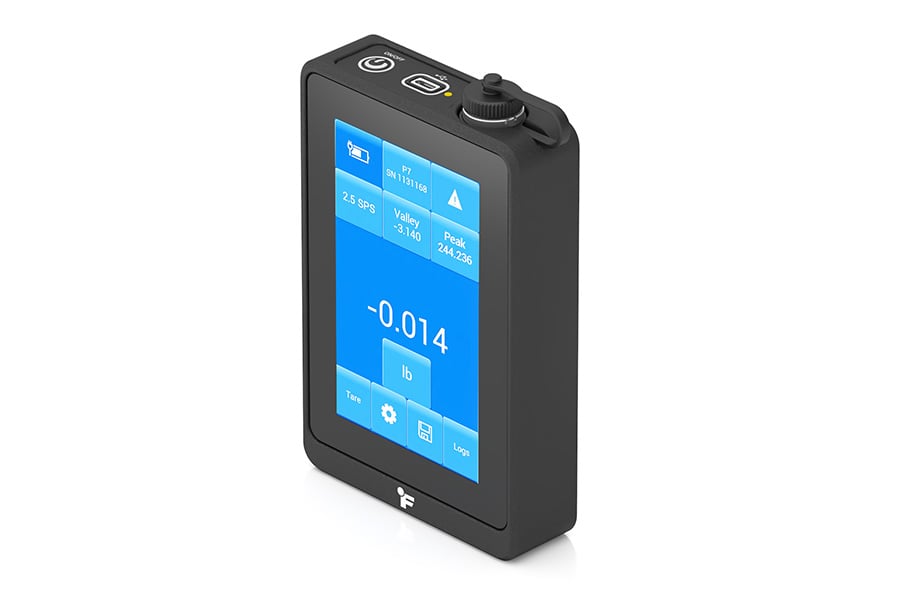
FUTEK sensors integrate easily with standard test equipment; specifically the IAA100 and IAA200 Series provide amplified voltage (VDC) or current (mA) outputs, making them compatible with most PLCs and DAQs. For quick readouts, options range from IPM650 Panel Mount Display and SENSLOG Handheld Display, to USB225 for high resolution data-logging and comprehensive analysis using FUTEK’s SENSIT Software. With a FUTEK System Calibration, your unit arrives ready for immediate force and torque measurements with NIST traceable or A2LA accredited ISO 17025 calibration.
How it Works
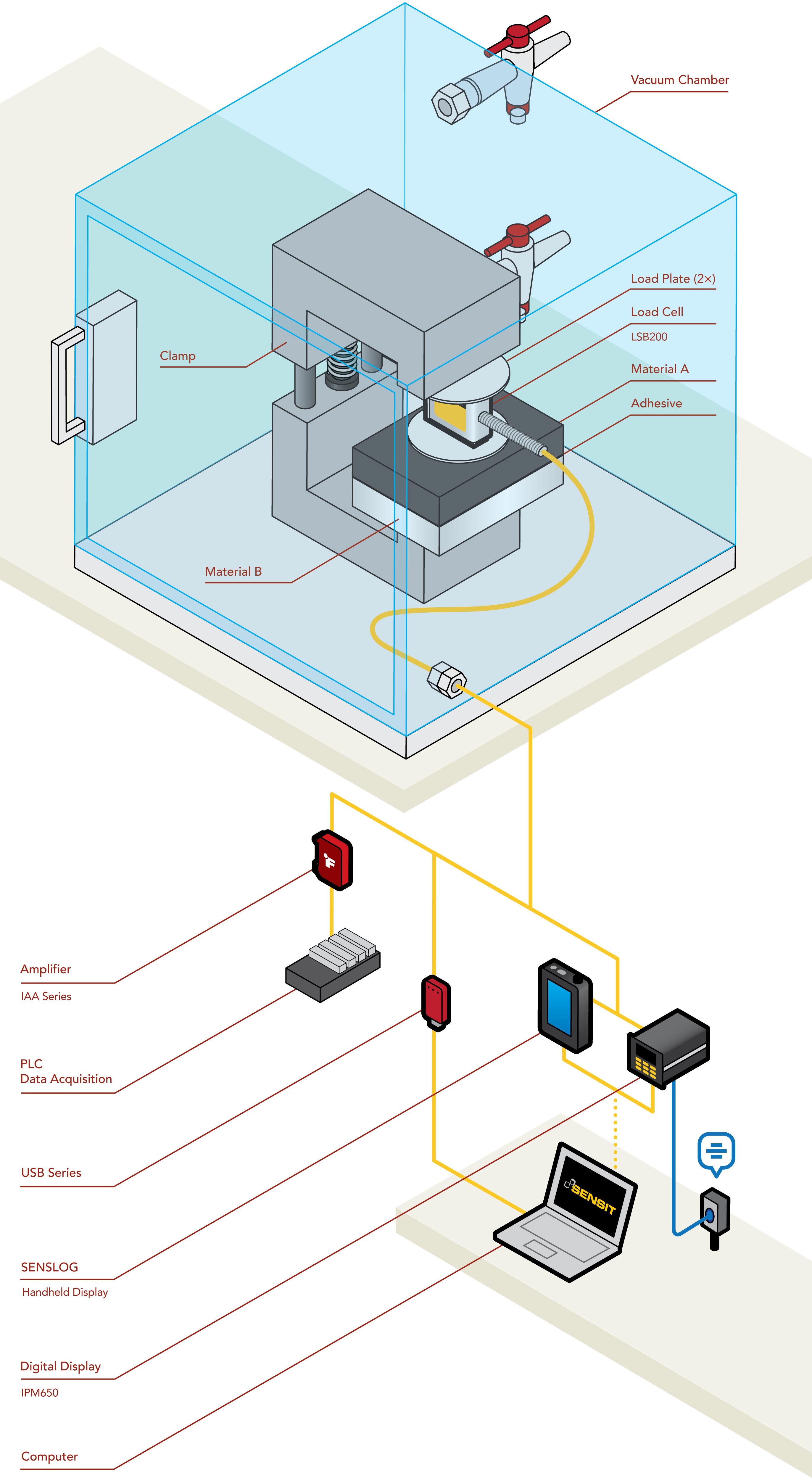
In this application, a Vacuum Compatible/Low Outgassing LSB201 Miniature S Beam Load Cell is installed in line with a clamp holding two materials to be bonded inside a vacuum chamber.
The LSB201 sensor cable is routed through a bulkhead feedthrough that helps maintain the vacuum environment while allowing the signal to safely exit the chamber.
The signal is then amplified via an IAA series analog amplifier, before being sent to a DAQ, displayed by an IPM650 Panel Mount Display or SENSLOG Handheld Display, or logged to a PC using USB225 USB Output Module .
Products in Use
Vacuum Compatible/Low Outgassing LSB200 Miniature S-Beam Jr. Load Cell paired with Instrumentation (USB225, IPM650 Panel Mount Display, SENSLOG Handheld Display or IAA Series Strain Gauge Analog Amplifier).
Contact Us
Please Contact Us with questions.
Why Outgassing Prevention in Vacuum Chambers is Essential
Vacuum testing is necessary in applications such as space-rated testing, wafer manufacturing, and material bonding, where maintaining a contaminant-free environment is critical. These systems are designed to remove unwanted gas molecules. However, when instrumentation is introduced, outgassing—the release of trapped gases from materials under low pressure—can pose serious challenges.. Outgassed vapors can cause staining and corrosion of materials within the chamber. Resulting deposits may occlude camera lenses and CCD elements, degrade sensor performance, and damage components, often invalidating measurements. To mitigate these risks, vacuum-compatible load cells and torque sensors are essential for both test measurement environments and automated manufacturing processes.
Maintaining Measurement Integrity with FUTEK’s Low-Outgassing Solutions
FUTEK has developed several force and torque sensor solutions using low-outgassing materials (such as Teflon) and adhesives to ensure vacuum compatibility and minimize contamination risks.
- LSB201 Miniature S-Beam Load Cell (QSH02270): Compact and precise, this sensor is offered in force ranges up to 100 lb and delivers unparalleled accuracy of 0.1% of Rated Output (RO), even in vacuum environments.
- LCM300 Inline Load Cell (QSH02215): Featuring a male-to-male threaded design for seamless integration, this model delivers high accuracy of 0.25% of RO under loads up to 100 lb. This unit is also uniquely calibrated for operation at temperatures as low as -45°C.
- LCF400 Universal Pancake Load Cell (QSH01534): Designed for demanding applications, this sensor supports up to 3,000 lb and provides high resistance to extraneous loading.
- LTH350 Through Hole Donut Load Cell (QSH02237): Optimized for high-capacity compression applications (5,000 lbs. max), this load cell maintains a compact footprint with an outer diameter of 1.48” and height of 0.5”.
- TFF400 Reaction Torque Sensor (QSH02278): Precision manufacturing and material selection, enable this flange-to-flange torque sensor to maintain exceptional accuracy (0.2% of RO) while measuring torques up to 500 in-lb. It is particularly well-suited for robotic torque sensing in vacuum chamber automation.
FUTEK also offers extensive customization to meet unique application requirements such as reduced footprints, increased capacity, and hermetic sealing for added protection. Across both load and torque sensing technologies, FUTEK ensures components such as flexure metals, cable materials, and strain gauge adhesives meet stringent vacuum standards to prevent outgassing.
Signal Conditioning and Precision In-House Calibration
FUTEK sensors integrate easily with standard test equipment; specifically the IAA100 and IAA200 Series provide amplified voltage (VDC) or current (mA) outputs, making them compatible with most PLCs and DAQs. For quick readouts, options range from IPM650 Panel Mount Display and SENSLOG Handheld Display, to USB225 for high resolution data-logging and comprehensive analysis using FUTEK’s SENSIT Software. With a FUTEK System Calibration, your unit arrives ready for immediate force and torque measurements with NIST traceable or A2LA accredited ISO 17025 calibration.